
A new industry whitepaper from GITEX AI EUROPE and research firm LUE identifies four pillars defining Europe’s path to digital and technological independence: computing power, cloud, open source, and capital.
Europe’s ambition for digital sovereignty is coming into sharper focus. A new whitepaper, “Digital Sovereignty: Technology Leadership Made in Europe,” released by GITEX AI EUROPE in partnership with LUE, maps the technological imperatives that could determine the continent’s innovation leadership over the next decade.
With Europe’s ICT market valued at €1.02 trillion, the report argues that sustaining competitiveness will depend on scaling AI computing infrastructure, advancing sovereign cloud systems, embedding open-source standards, and mobilising deeper capital pools for startups. Together, these pillars form what the study calls a “new industrial compact” – aligning Europe’s innovation capacity with its economic and energy future.
Compute: Europe’s new industrial power
AI-driven workloads are pushing Europe’s data infrastructure to its limits. The continent’s data centre capacity is expected to grow by 70% by 2030, but demand from AI and high-performance computing is rising even faster.
Germany alone may need to triple its capacity, requiring up to €60 billion in new investment. Initiatives such as the EU’s €200 billion InvestAI programme—funding five AI gigafactories equipped with more than 100,000 specialised GPUs—illustrate how Europe aims to build industrial-grade compute capacity accessible to enterprises, startups, and research institutions alike.
The study stresses that this expansion must go hand-in-hand with clean energy integration, ensuring that Europe’s digital infrastructure grows sustainably and strengthens its broader energy transition goals.
Sovereign cloud: Building autonomy, not isolation
As cloud adoption accelerates—expected to reach 91% of enterprises by 2028—the report highlights a critical imbalance: non-European hyperscalers still control around 70% of the market.
To reverse that dependency, the report’s authors call for “sovereign-first” cloud architectures that maintain operational, legal, and data autonomy within European jurisdictions. Rather than isolationism, the goal is transparent, auditable systems that preserve innovation freedom under European governance and security standards.
Open source: Europe’s competitive edge
Open source emerges as a key enabler of sovereignty. By embracing open, community-driven cloud technologies, Europe can reduce dependency on proprietary vendors and boost interoperability.
Initiatives such as the Sovereign Cloud Stack (SCS)—funded by Germany’s Federal Ministry for Economic Affairs and Climate Action—show how shared open standards can empower companies to innovate across platforms while retaining control of their digital infrastructure. The whitepaper argues that open source represents Europe’s most natural advantage: collaborative innovation with transparency at its core.
Backing Europe’s deep-tech builders
Infrastructure alone cannot sustain sovereignty—investment must follow. Despite a wealth of engineering talent, only 5% of global venture capital flows into the EU tech ecosystem. The study urges the creation of growth-stage funding mechanisms to help deep-tech startups in AI, semiconductors, and cloud infrastructure scale globally without relocating.
New public-private investment frameworks are emerging: Germany’s KfW DeepTech Future Fund (€1 billion) and the IPCEI on Next-Generation Cloud and Services (€3 billion) are channeling funds toward the continent’s most strategic technology projects.
The report concludes that digital sovereignty will require policy alignment, capital mobilisation, and cross-border cooperation. True sovereignty, it notes, “isn’t solitude—it’s about systems that are open by design and secure by default.”
GITEX AI EUROPE 2026: The Deep Tech Nexus
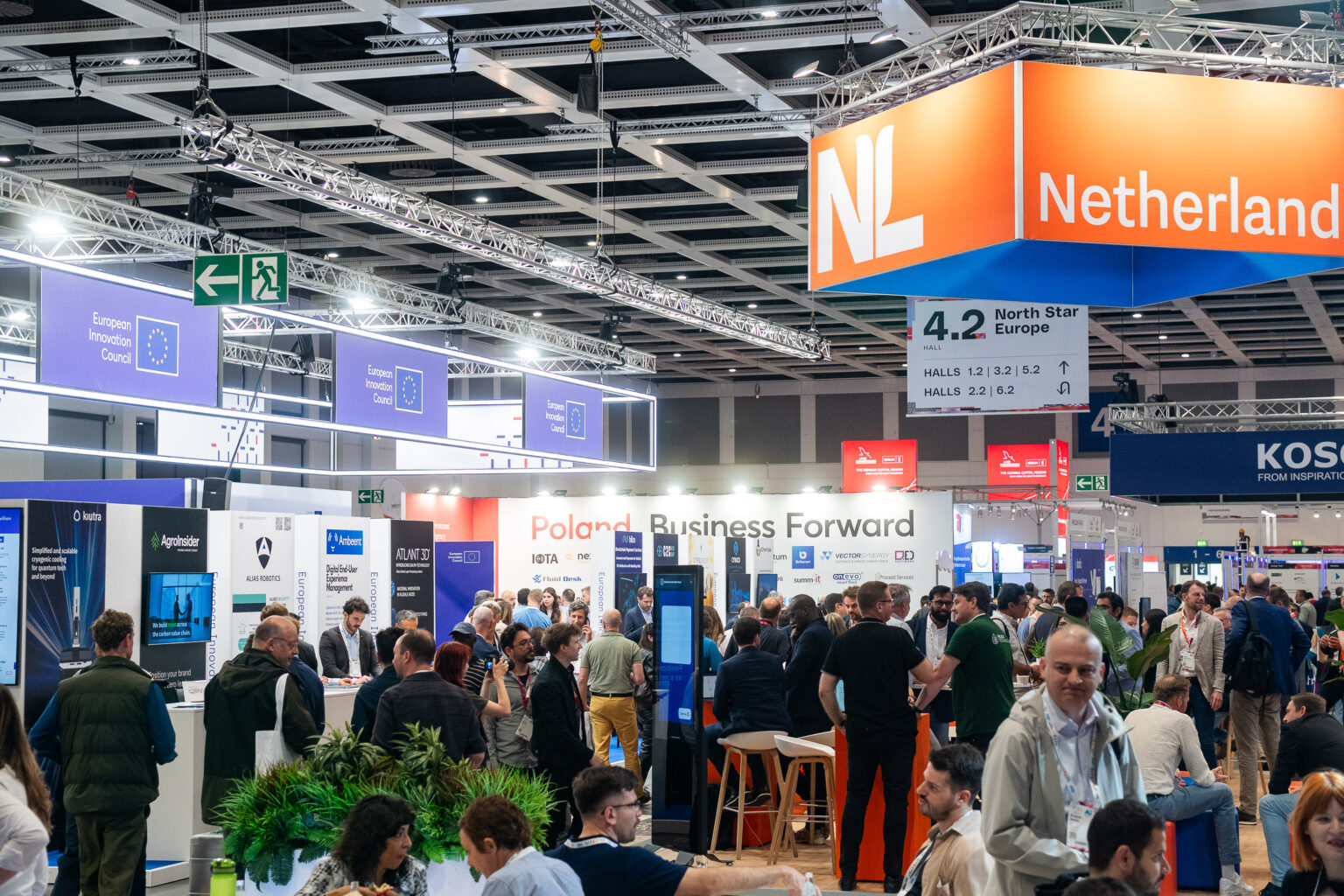
Returning from 30 June to 1 July 2026 at Messe Berlin, GITEX AI EUROPE is set to become Europe’s most influential deep tech and AI showcase—uniting innovators, policymakers, investors, and startups shaping the next era of digital infrastructure.
Organised by KAOUN International and endorsed by the Berlin Senate Department for Economics, Energy and Public Enterprises and Berlin Partner for Business and Technology, the 2026 edition will gather over 1,400 enterprises and startups from 100 countries across fields including AI, deep tech, quantum, cybersecurity, and cloud.
Part of the global GITEX network, which spans 12 countries from the UAE to Singapore, GITEX AI EUROPE cements Europe’s role as a central hub in the global technology dialogue.
📄 Access the full whitepaper: https://event.gitexeurope.com/GE26-whitepaper2026
Deep Tech News Europe is a GITEX Europe 2026 media partner