

In 2024, Europe’s share of the global space upstream (launch + manufacturing) market showed a continued decline and sat at just 6%, while the share of the downstream (services) market was a respectable 19%. As the European Space Agency’s (ESA) report points out, Europe’s upstream struggle has been rooted primarily in a lack of institutional demand compared to the US and China.
However, the tides are shifting, pushed and pulled by the growing mass that is defence worries and budgets. ESA Member States recently delivered the largest budget in history (€22.1 billion for 2026-2028), with an unprecedented focus on security and defence.
EU programme funding, national defence procurement, public investments into companies and infrastructure, and explicit policy/analyst recommendations all point to rising institutional upstream demand across Europe. Moreover, this demand’s naturally paired with attention to sovereignty, which is channeling investment and procurement toward European SMEs and deep tech companies.
While Europe’s space ecosystem may nonetheless continue to lag behind its geopolitical peers, right now is a good time to be a space tech in Europe.
To that end, we decided to highlight 5 European deep tech startups in the field, most of which have exciting plans for 2026. These companies innovating in rocket (and satellite) propulsion systems are likely to benefit from Europe’s new-found drive and you should definitely keep an eye on them.
1. HyImpulse Technologies
Founded: 2018
Recent funding: €45M (€15M series A + €30M public funding), October, 2025
Current stage: Plans to start commercial flights in 2026 and launch the SL1 vehicle by 2027
HyImpulse’s flagship SL1 orbital vehicle utilizes a unique hybrid propulsion system that combines liquid oxygen with solid paraffin – essentially high-grade candle wax. This innovation is a game-changer because paraffin is non-explosive and easy to handle, significantly reducing manufacturing costs and insurance premiums compared to traditional liquid-fuel rockets. Moreover, their hybrid system is labeled as “green”, helping build on a sustainability angle that’s growing more important in the industry.
Based in Neuenstadt am Kocher, Germany, HyImpulse has grown to over 65 employees across its German and UK sites. A spin-off from the University of Stuttgart, the company made headlines in 2024 with a successful suborbital launch in Australia and has since secured over €45 million in funding, including significant backing from the ESA.
2. PLD Space
Founded: 2011
Recent funding: €11M loan, December, 2024
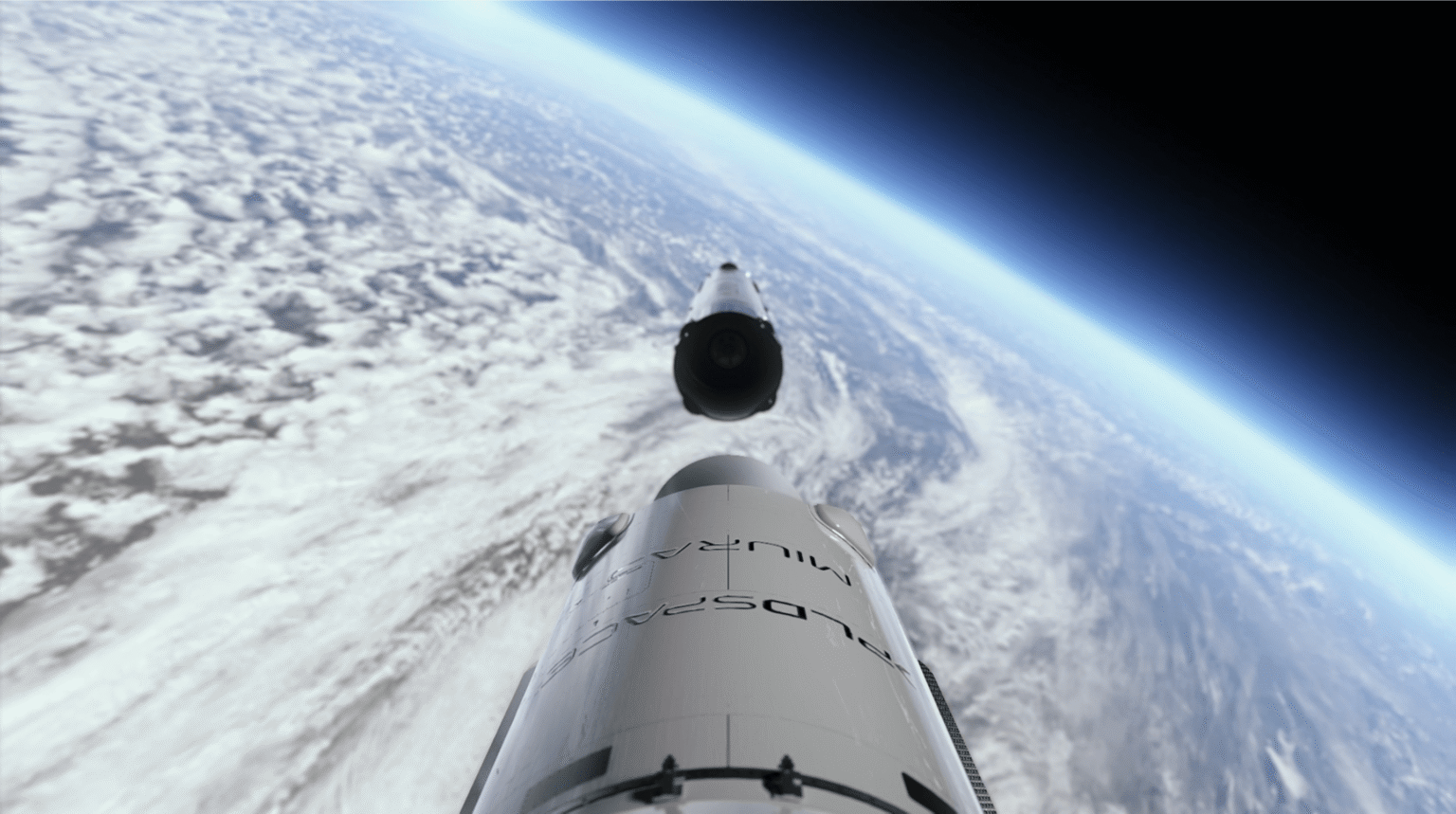
Current stage: In the final stages of building its launch facility and preparing for first flight of MIURA 5 in H1 2026
The MIURA 5 is a two-stage orbital launcher designed to be Europe’s first partially reusable cargo rocket, utilizing a sustainable KeroLox (kerosene and liquid oxygen) fuel mix. Its innovation lies in the TEPREL-C engine, the most powerful private rocket engine in Europe, which is built using a “test and learn” philosophy that mirrors the rapid iteration seen in Silicon Valley. PLD Space is positioned to compete with global heavyweights like Rocket Lab, offering a sovereign European alternative for small-to-medium satellite constellations that require high-frequency, reliable launches.
Headquartered in Elche, Spain, PLD Space is employing over 400 specialists as of late 2025. The company reached a historic milestone by launching Europe’s first private suborbital rocket, MIURA 1, and has since raised more than €170 million to scale its operations. They have secured a high-profile 25-year concession at the Guiana Space Centre in Kourou.
3. Isar Aerospace
Founded: 2018
Recent funding: €150M, June, 2025
Current stage: Conducted the inaugural test flight of its two-stage rocket in 2025. Second flight planned for very early 2026.
Their Spectrum rocket is a two-stage vehicle specifically engineered to deploy satellite constellations with surgical precision. It is considered highly innovative due to its automated production process, which utilizes advanced 3D printing and carbon-fiber composites to lower the weight and cost of the airframe. Isar’s Spectrum is built for high-volume scalability, aiming to become the “workhorse” of the European orbital market by providing the most cost-efficient price-per-kilogram in its class.
Based near Munich, Germany, Isar Aerospace is Europe’s most well-funded independent space startup, with over €400 million in total capital and a workforce of 400+ international experts. Founded in 2018, the company has quickly established a vertically integrated manufacturing model, producing almost all rocket components in-house. They have signed major launch agreements with the Norwegian Space Agency.
4. Exotrail
Founded: 2017
Recent funding: $58M series B, February 2023
Current stage: Second orbital transfer vehicle (OTV) mission planned for launch in Q1 2026
Moving from rockets to satellites, Exotrail’s core innovation is the “spacevan”, an orbital transfer vehicle (OTV) powered by their proprietary Hall Effect Thrusters – a form of high-efficiency electric propulsion. This solution is innovative because it allows satellites to catch a ride to their final destination in space, significantly extending their mission life and reducing the amount of propellant they need to carry.
Headquartered in Massy, France, Exotrail operates at the heart of the French aerospace cluster with a team of over 130 people. Unlike the others on this list, Exotrail focuses on “end-to-end space mobility”, providing the systems that help satellites move once they reach orbit. They have built an impressive portfolio of over 20 global customers, including NASA.
5. RFA Space
Founded: 2018
Funding: €30m, August, 2023
Current stage: Secured a launch licence from the UK; is gearing up toward first test launch of RFA ONE
RFA Space’s RFA ONE launcher is powered by the revolutionary Helix engine, one of the first in the world to use high-performance staged combustion. This engine is innovative because it offers much higher fuel efficiency than standard engines, allowing for a higher payload capacity at a fraction of the traditional cost. RFA competes directly with SpaceX’s rideshare programs by offering dedicated, precise orbital delivery, while looking to provide the most competitive pricing in the European micro-launcher market.
Based in Augsburg, Germany, RFA Space (Rocket Factory Augsburg) employs over 300 people from 45 different nations. They have been a recurring winner of the DLR (German Aerospace Center) microlauncher competition, which provided them with the initial momentum to challenge the global launch market. RFA is known for its lean, agile culture, often referred to as the “automotive approach to space” due to their use of industrial mass-production techniques.