

It is no coincidence that cities with strong universities also tend to produce successful deep tech startups – academic knowledge sits at the heart of deep tech innovation. Between science and business, however, lies a crucial intermediary space – this is where science parks operate. They function as facilitators between research and the market, translating academic knowledge into real-world impact.
Science parks typically create dense innovation environments by physically and intellectually connecting students, researchers, R&D labs, entrepreneurs, and mentors. Often located on or near university campuses, they lower the barriers between discovery and commercialization. Global companies such as HP, Tesla, AstraZeneca, and Bayer have either emerged from science parks or been among their early tenants, exemplifying the role these ecosystems play in nurturing innovation at scale.
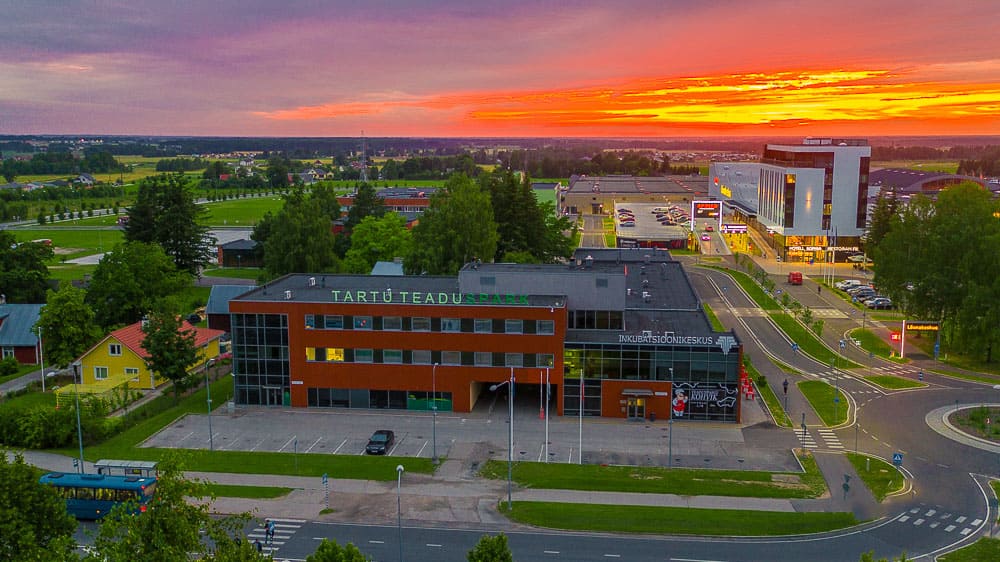
In the Baltic region, Tartu Science Park “Sparkup” stands out as a prime example of a university-driven innovation ecosystem. Estonia, though small in size, has built an outsized reputation as a producer of tech unicorns and a global leader in digital governance. Less widely known, however, is the country’s strength beyond software – particularly in hardware, robotics, materials science, and other deep tech fields rooted in academic research.
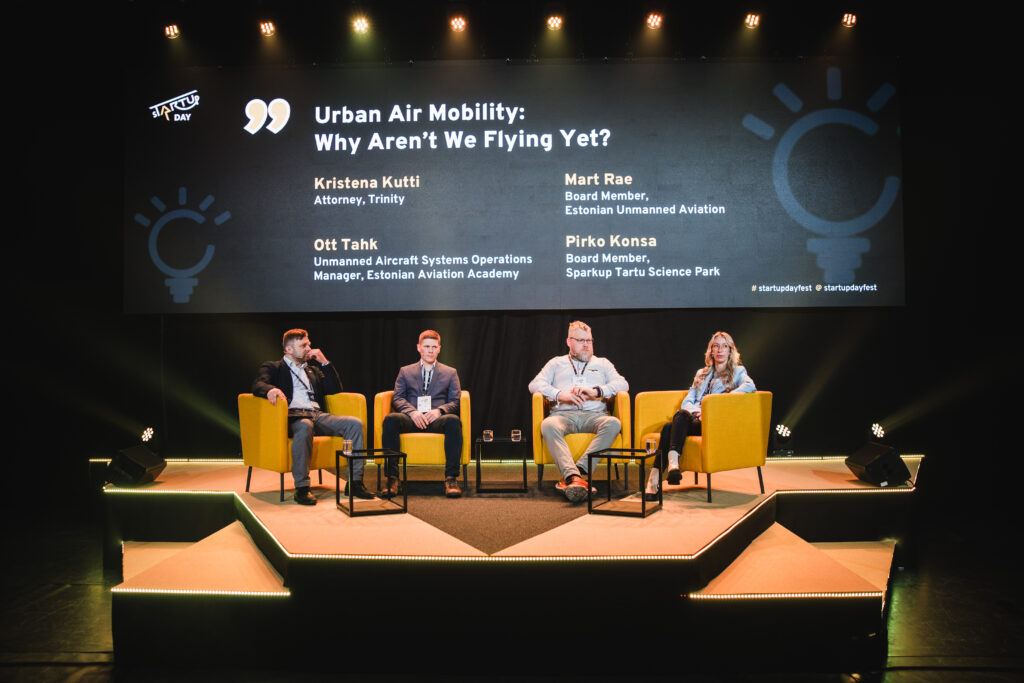
We spoke with Pirko Konsa, Member of the Management Board at Tartu Science Park, during the sTARTUp Day conference in Tartu, about the role Sparkup plays in shaping and supporting Estonia’s deep tech ecosystem.
How Tartu’s academic legacy fuels innovation
Tartu has been a university city since the founding of the University of Tartu in 1632, growing into a regional intellectual force over the centuries. In the 19th century, it served as a key training ground for professors across the Russian Empire. Pirko Konsa emphasizes that the town’s science-driven culture is a legacy that must be preserved and continuously nurtured:
“This is a detail we cannot forget. If there is no science ecosystem and culture [of innovation], you can pour in any amount of money, and it will be wasted.”
Tartu Science Park was founded in 1992, shortly after Estonia regained its independence, and became the first of its kind in the Baltic States. It now operates under the Tartu Science Park Foundation, jointly founded by the City of Tartu, University of Tartu, Estonian University of Life Sciences in Tartu, and the Estonian government.
From early on, Tartu’s identity as a university town shaped a shared understanding that new businesses should grow out of the scientific and knowledge base already present in the city. The region has long been home to strong research in fields such as optics and the natural sciences, with local scientists even contributing to international space programmes. The talent, Pirko Konsa notes, has always been there.
From space to clean energy: Tartu Science Park’s focus areas
While the specific programmes and instruments have evolved over time, the underlying mission – connecting scientific discovery with real-world application – has remained constant for over 30 years. Tartu Science Park operates across five strategic focus areas, all closely aligned with the research strengths of local universities:
- Space technologies, supported by the Estonian Space Incubator;
- Unmanned aviation, which is closely linked to space-related research;
- Artificial intelligence, building on the strong expertise of the University of Tartu’s Institute of Computer Science;
- Biotechnology and biomedicine – fields in which Tartu has a long-standing tradition, from the creation of the Estonian Genome Centre to more recent research initiatives. This focus also includes agriculture, forestry, and novel food – academic fields strongly represented in the Estonian University of Life Sciences in Tartu.
- Clean and renewable energy, driven by strong local competencies in smart energy systems and the development of novel synthetic fuels such as hydrogen and methanol.
Estonian capital Tallinn is home to the country’s second science park – Tehnopol, linked to TalTech (Tallinn University of Technology). While Tehnopol focuses on applied technologies, ICT and digital solutions, cybersecurity and defence tech, Sparkup is more deeply rooted in academic research, supporting early-stage, science-driven deep tech.
Guiding deep tech from idea to implementation
So, how does Tartu Science Park help bring deep tech ideas to life? First, by working closely with universities to identify researchers with the interest (and the potential) to build commercially viable businesses, connecting them with the business community and helping clarify where their technologies can create the greatest impact.
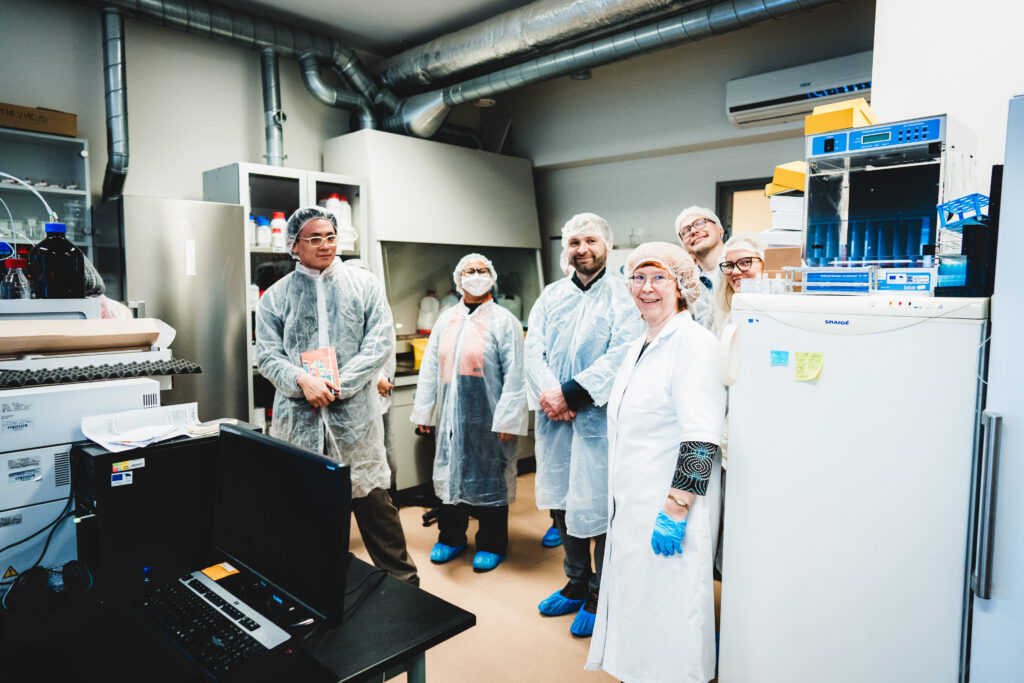
Second, Sparkup supports early product development through prototyping, testing, and validation. To enable this, it provides access to specialized facilities, including mechanical engineering and biotechnology labs, gene sequencing capabilities, and clean rooms for working with hazardous materials.
Tartu Science Park also focuses on bridging the gap between cutting-edge AI research and everyday industrial implementation, working directly with industrial companies to identify where AI solutions can add real value. Practical use cases include image recognition systems that automatically check product labelling on production lines, safety applications that detect human presence in hazardous areas and trigger automatic shutdowns, and AI tools that identify anomalies in complex chemical processes to provide early warnings before failures occur.
Tartu Science Park’s role is to act as an initial guide, helping companies identify where these opportunities exist – whether in robotics or software-based AI –, conducting early audits, and then connecting them with specialized experts who can take the projects further.
Deep tech success stories from Tartu
When asked to name successful examples that emerged from the Tartu Science Park, Pirko Konsa highlights Skeleton Technologies, one of Estonia’s flagship deep tech companies. The company develops advanced ultracapacitor energy storage solutions, based on years of intensive scientific research. Pirko explains that Tartu Science Park has supported the company for more than a decade, helping it find the right environments and partnerships as the technology matured – a reminder that deep tech innovation is always a long-term journey. Today, Skeleton has reached industrial scale, securing several hundred million euros in investment and establishing large-scale ultracapacitor production facilities in Germany.
Another example from the campus is Celvia, a company that has been steadily expanding its services across the Baltic States. Celvia has developed a genetic screening test for pregnant women that identifies certain gene mutations at a very early stage of pregnancy. The park also supports companies such as Solis BioDyne, which develops specialized reagents and chemicals used in gene-based diagnostic tests, including those behind widely used PCR tests.
The ecosystem also extends into space technologies, with companies designing and building components for CubeSat missions – highlighting the breadth of deep tech emerging from the campus.
Tartu Science Park does not distribute subsidies; instead, it operates business-oriented programmes designed to support commercially viable deep tech innovation. Public grant funding is largely handled by Estonia’s national innovation agency, while the park focuses on market-driven support and collaboration.
Building investable deep tech across Europe
Tartu Science Park is a member of the European Deep Tech Alliance, reflecting the inherently international nature of deep tech collaboration. Pirko notes:
“Strong European and global networks are essential, especially now, when global supply chains are rapidly changing. It’s very important to think how we in Europe collaborate, because if I want to build a really competitive company, I need to find the best talent in Europe, and I need to support [other nations’] initiatives as well, with our expertise. So these kinds of networks are really important.”
In late January 2026, a new €12.6 million government-backed deep tech programme was launched in Estonia to support early-stage deep tech companies. Run in collaboration with universities, the programme focuses on identifying promising research teams, equipping scientists with founder-level skills, and pairing them with experienced, deep tech-minded business partners from an international talent pool. Over the next three and a half years, the initiative aims to help create 37-40 deep tech companies capable of attracting private investment.
Pirko notes that the program’s novelty lies in connecting startups to European networks from day one – helping them find customers, technical partners, and testing environments across various European countries. One early example is Spiral Hydrogen, a startup developing a novel hydrogen production technology, which entered Sparkup’s accelerator last spring and is now participating in an acceleration programme in Delft, with investment discussions underway.
According to Pirko, the real challenge is helping scientific teams reach an investable stage – moving from promising solutions to clearly defined problems, markets, and customers. This is where Tartu Science Park plays a critical role: guiding deep tech teams toward a focused vision that reduces risk and makes their innovation attractive to investors.